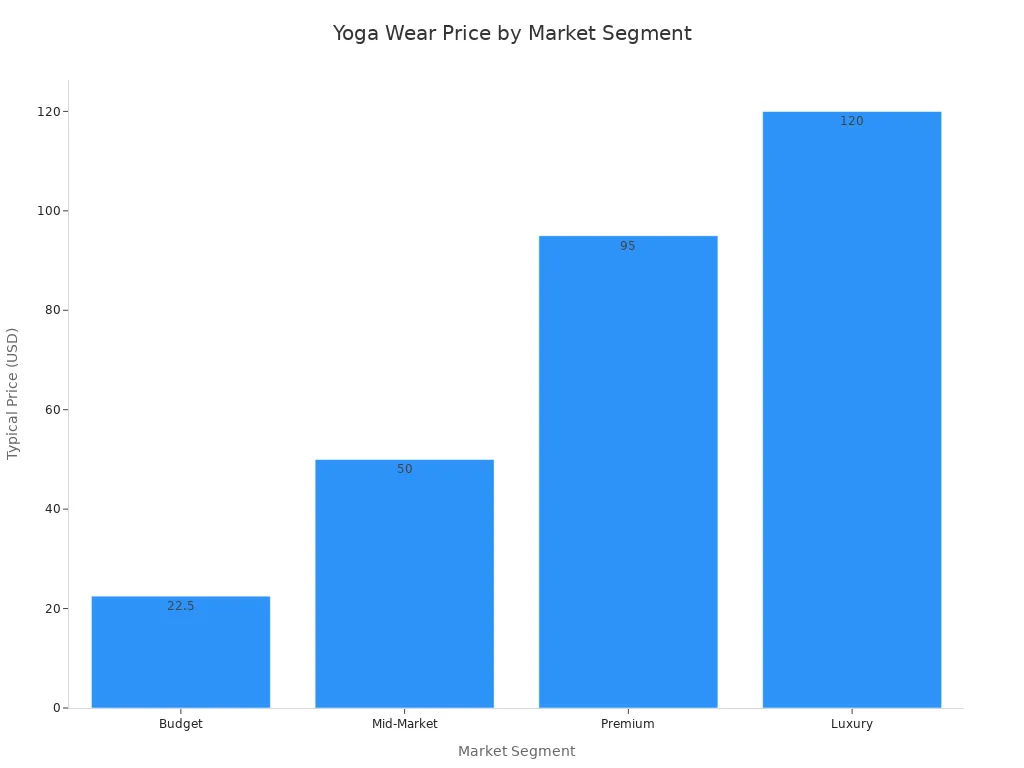
When you start yoga, you want clothes that let you move, stretch, and breathe with ease. You don’t need to spend a lot to feel good. Basic yoga wear often costs less than many other fitness outfits. Check out this chart—budget leggings range from $15 to $30, which means you can find comfort without breaking the bank.
Choose outfits that help you focus, feel flexible, and boost your confidence every time you practice.
Key Takeaways
Prioritize comfort and fit when choosing yoga wear to enhance your practice.
Select breathable fabrics like bamboo or moisture-wicking materials to stay cool and dry.
Test your outfit with simple stretches to ensure it allows for free movement.
Look for seamless designs and soft seams to avoid irritation during practice.
Choose supportive undergarments, like a good sports bra, for added comfort.
Avoid overdressing or underdressing by matching your outfit to the studio temperature.
Start with a few essential pieces that mix and match easily for versatility.
Trust your instincts; if you feel good in your clothes, you will practice with confidence.
Comfort and Fit
Why It Matters
When you step onto your mat, comfort should come first. You want to feel at ease in every pose, not distracted by tight seams or itchy tags. The right fit lets you focus on your breath and movement, not on adjusting your clothes. Many beginners find that comfortable yoga wear makes a big difference in their practice. Here are some of the most common reasons people choose comfort and fit as their top priorities:
The right clothes keep your mind on yoga, not on discomfort.
Good yoga wear supports your body and boosts your confidence.
Specially designed yoga clothes offer flexibility and support.
You do not need fancy outfits. You just need clothes that let you stretch, bend, and relax without worry.
Movement and Flexibility
Yoga asks your body to twist, reach, and balance in new ways. If your clothes feel too tight or too loose, you might struggle to move. A proper fit means your shirt stays in place during downward dog, and your pants do not bunch up in child’s pose. You want to test your outfit by doing a few simple stretches before class. If you can move without restriction, you have found a good match.
Tip: Try a few yoga poses at home in your chosen outfit. If you feel any pinching or sliding, try a different size or style.
Flexible fabrics matter, too. Look for materials that stretch with you but do not lose their shape. This way, you can flow from pose to pose with ease.
Confidence in Practice
Feeling good in your clothes can help you feel good in your practice. When you wear something that fits well and feels soft, you stand taller and move with more confidence. Many beginners notice that the right yoga wear helps them relax and focus on their breath.
Here’s a quick look at how comfort and fit can boost your confidence:
Evidence Description | Key Points |
|---|---|
Choosing clothes that feel good | Enhances inner peace and confidence |
Benefits of yoga pants | Provides comfort, support, and coverage for confident practice |
Wearing yoga pants | Helps you feel relaxed and move freely, which boosts confidence |
You deserve to feel comfortable and supported every time you practice. When you choose yoga wear that fits well, you give yourself the freedom to enjoy every moment on the mat.
Yoga Wear Essentials
Tops
Fitted vs. Loose
When you pick a top for yoga, you want something that moves with you. Fitted tops stay in place during poses like downward dog or plank. Loose tops can feel breezy, but they might ride up or shift when you bend or stretch. Many beginners like fitted tanks or t-shirts because they offer support and don’t get in the way. If you prefer a looser fit, look for tops with a banded hem or tie at the waist to keep things secure.
Tip: Try a few yoga poses in your top before class. If it shifts or feels uncomfortable, try a different style.
Here’s what certified yoga instructors often recommend for tops:
Loose-fitting garments such as tanks or t-shirts
Breathable fabrics like cotton or bamboo
Clothing that stays in place during practice
Best Fabrics
The fabric you choose makes a big difference in comfort and performance. You want something soft, breathable, and able to wick away sweat. Some fabrics also help regulate temperature, which is great if you practice in a warm or cool room.
Fabric Type | Description |
|---|---|
Soft, natural, and breathable; ideal for gentle yoga styles. | |
Bamboo Blends | Moisture-wicking properties; great for active practices. |
Recycled Polyester | Eco-friendly option; combines breathability with sustainability. |
You can test your top by stretching your arms overhead or twisting side to side. If the fabric moves with you and feels good on your skin, you’ve found a winner.
Bottoms
Leggings
Leggings are a favorite for many beginners. They fit snugly, move with your body, and don’t bunch up during practice. Look for leggings made from stretchy, moisture-wicking fabrics. High-waisted leggings offer extra support, especially during core work. Avoid styles that feel too tight around the waist or legs, as this can cause discomfort.
Some popular options among beginners include:
ColorfulKoala High Waisted Brushed: Budget-friendly, comfortable, and great for performance.
Crz Yoga NakedFeel Leggings Double Waist Seam: Lightweight and breathable, perfect for hot yoga.
Yoga leggings should feel comfortable and flexible. They should fit snugly but not squeeze. Overly compressive leggings can distract you, especially around the waist.
Pants
Yoga pants offer a looser fit than leggings. They give you room to move and can feel more relaxed, especially if you don’t like tight clothing. Flowing pants work well for gentle or restorative yoga. Make sure the waistband stays put and the fabric doesn’t drag on the floor.
Many instructors suggest:
Comfortable yoga pants that allow easy movement
Alternatives to traditional tights for those who want more comfort
Shorts and Capris
Shorts and capris are great for hot yoga or warm studios. They keep you cool and let your skin breathe. Choose shorts with a secure waistband and enough coverage so you can move freely without worry. Capris offer a balance between leggings and shorts, ending below the knee for extra comfort.
When you try on bottoms, do a few squats or lunges. If you can move without pinching or sliding, you’ve found a good fit.
Undergarments
Sports Bras
A good sports bra is essential for yoga. You want support without restriction. Look for bras made from soft, breathable fabrics like spandex or polyester blends. These materials keep their shape and provide comfort over time. Adjustable straps and underbust closures help you get a personalized fit and prevent shoulder strain or chafing.
Here’s what to look for in a yoga sports bra:
Adjustable straps and closures for a custom fit
Soft, non-restrictive materials that don’t chafe
Breathable fabrics to keep you cool and dry
Four-way stretch for full range of motion
Underwear Choices
The right underwear can make a big difference in your comfort. Choose a snug fit that stays in place and doesn’t restrict movement. Stretchy fabrics like microfiber or bamboo help manage moisture and keep you dry. Flatlock seams and contoured designs prevent chafing and support your body during practice.
Proper fit prevents distractions and allows for full range of motion
Stretchy fabrics like microfiber or bamboo for comfort and moisture management
Contoured pouches and flatlock seams to avoid chafing and ensure support
Choosing the right yoga wear means focusing on comfort, fit, and fabric. Test your outfit by moving through a few yoga poses. If you feel comfortable and supported, you’re ready to enjoy your practice.
Materials for Yoga Wear
Breathable Fabrics
When you pick out yoga clothes, breathability should be at the top of your list. You want fabrics that let air flow and help your skin stay cool, especially during longer sessions. Organic materials like bamboo, hemp, and cotton feel soft and gentle on your skin. These fabrics work well for gentle yoga or slower-paced classes because they allow your body to breathe naturally.
Synthetic fabrics, such as polyester and nylon, use special designs to boost ventilation. They might not feel as soft as organic options, but they keep you cooler during intense or hot yoga. Here’s a quick comparison to help you see the differences:
Feature | Organic Fabrics | Synthetic Fabrics |
|---|---|---|
Breathability | Excellent natural airflow | Moderate, engineered ventilation |
Moisture Control | Absorbs sweat, dries slower | Wicks sweat, dries quickly |
Stretch & Shape | Moderate stretch, may loosen | Superior stretch, retains shape |
Skin Sensitivity | Gentle, hypoallergenic | May irritate without treatment |
Eco-Impact | Biodegradable, less pollution | Long-lasting, microplastics |
Tip: If you sweat a lot or practice in a warm studio, try synthetic blends for better airflow and comfort.
Moisture-Wicking
No one likes feeling sticky or damp during yoga. That’s where moisture-wicking fabrics come in. These materials pull sweat away from your skin and help it evaporate fast. Polyester-nylon-spandex blends do this job best. They keep you dry and comfortable, even in hot yoga or power classes.
Cotton, on the other hand, soaks up sweat and dries slowly. This can leave you feeling heavy and uncomfortable. If you want to avoid that soggy feeling, skip cotton for active sessions.
Polyester, nylon, and spandex blends wick moisture and dry quickly.
Cotton blends work for gentle yoga but may feel damp in sweaty classes.
Moisture-wicking fabrics help regulate your body temperature and prevent overheating.
A study from Western Michigan University found that people who wore moisture-wicking shirts stayed cooler during exercise than those in cotton shirts. These fabrics use capillary action to move sweat away from your skin, so you stay fresh and focused.
Stretch and Durability
Yoga asks your body to bend, twist, and stretch in all directions. You need clothes that move with you and bounce back to their original shape. Synthetic fabrics, especially those with spandex, offer the best stretch and recovery. They let you flow from pose to pose without restriction.
Durable fabrics also matter. You want yoga clothes that hold up after many washes and lots of practice. Quality yoga wear keeps its shape and color, so you don’t have to replace it often.
Stretchable fabrics give you freedom to move in every pose.
Durable materials keep their shape and last longer, even with frequent use.
Good yoga clothing supports your practice and saves you money over time.
Note: Always check the label for spandex or elastane. These fibers add stretch and help your clothes last longer.
Choosing the right materials for your yoga wear makes a big difference. You’ll feel cooler, drier, and more confident every time you step on the mat.
Features to Look For
Seamless Design
You want yoga clothes that feel smooth against your skin. Seamless design means fewer stitches and joins, so you get less rubbing and irritation. When you move through poses, seams can dig in or twist, which distracts you from your practice. Seamless yoga tops and leggings help you focus on your breath and movement, not on adjusting your outfit. You’ll notice that seamless pieces often last longer, too, because there are fewer weak spots that can tear or fray.
If you’ve ever felt a scratchy seam during downward dog, you know how important this feature is. Seamless designs also look sleek and modern, which can boost your confidence when you step onto the mat.
Gussets and Compression
Gussets and compression features make a big difference in how your yoga wear feels and performs. A gusset is a small, diamond-shaped piece of fabric sewn into the crotch or underarm area. It gives you extra room to stretch and move, so you don’t feel pinched or restricted. You’ll find that gussets help prevent chafing and discomfort, especially during longer sessions.
Compression tights offer support for your muscles. They gently hug your legs, which can improve circulation and help you feel more stable in balancing poses. Here’s how these features work for you:
Supportive gusset: Adds comfort and support, prevents chafing.
Blood flow: Compression boosts circulation, keeps your legs feeling fresh.
Muscle oxygenation: Better blood flow means more oxygen for your muscles, so you feel less tired.
Stability: Compression gives your muscles extra support, lowering your risk of injury.
Recovery: Helps your muscles recover faster, so you feel less sore after practice.
If you want to get the most out of your yoga session, look for leggings or shorts with gussets and gentle compression. You’ll notice the difference in comfort and support right away.
Antibacterial Properties
Staying fresh during yoga is important, especially if you practice in a warm studio or sweat a lot. Some yoga wear uses special technology to fight bacteria and odors. Silver ion technology is one of the best solutions. It stops bacteria and viruses from growing on your clothes, keeping you feeling clean and confident.
Silver ion technology is a leading antimicrobial solution for yoga apparel, effectively disrupting the growth of bacteria and viruses on contact. Ionic+® technology achieves a minimum 3-log reduction of microbes within one hour and maintains its antimicrobial effect through more than 200 washes. Additionally, natural fibers like bamboo are noted for their antibacterial properties, demonstrating three times the antibacterial effectiveness of cotton, making them ideal for activewear.
Bamboo fabric is another great choice. It keeps your clothes fresher during tough workouts, and it’s gentle on sensitive skin.
Bamboo fabric keeps garments fresher during intense workouts compared to polyester, which retains sweat and odor. This makes bamboo an excellent choice for individuals with sensitive skin or allergies.
When you choose yoga wear with antibacterial properties, you spend less time worrying about odors and more time enjoying your practice.
Tagless and Soft Seams
When you step onto your yoga mat, you want to feel comfortable from the first pose to the last. Scratchy tags and rough seams can ruin that experience. You might not notice them at first, but as you move and stretch, they start to irritate your skin. That’s why tagless and soft seam designs matter so much in yoga wear.
Tagless designs mean you don’t have to deal with labels poking or scratching your neck or waist. You can focus on your breath and movement, not on adjusting your clothes. Many brands now print size and care information directly onto the fabric. This simple change makes a big difference in how you feel during practice.
Soft seams, especially flatlock seams, lie smooth against your skin. They don’t rub or dig in, even when you twist or hold a pose for a long time. You’ll notice that flat seams create a sleek look and prevent chafing. If you’ve ever felt a seam digging into your side during a stretch, you know how distracting it can be.
Tip: Always check the inside of your yoga clothes before buying. Run your fingers along the seams. If they feel smooth and flat, you’re on the right track.
Here’s why tagless and soft seams are worth looking for:
You stay fully immersed in your practice because nothing distracts you from your poses.
Tagless designs prevent scratchy irritation, so you don’t have to stop and adjust your clothes.
Flatlock seams lie smooth against your skin, reducing the risk of chafing.
Clothes with these features are easy to move in, letting you stretch and bend without worry.
You might think these details are small, but they add up. When your yoga wear feels good, you move with confidence. You don’t have to worry about red marks or itchy spots after class. Instead, you finish your session feeling relaxed and refreshed.
Many beginners overlook these features when shopping for yoga clothes. They focus on color or style and forget about comfort. You can avoid this mistake by choosing tagless tops and bottoms with soft seams. Look for descriptions like “flatlock stitching” or “seamless design” on product tags.
If you want to build a yoga wardrobe that supports your practice, start with comfort. Tagless and soft seam designs help you stay focused, comfortable, and confident every time you step on the mat. Your skin will thank you, and your yoga journey will feel smoother from day one.
Accessories
Yoga Socks
You might wonder if you need special socks for yoga. Yoga socks can make a big difference, especially when you practice on a slippery mat or studio floor. These socks come with grips on the bottom, so you stay steady in every pose. You get more control and confidence, even if you’re new to yoga.
Enhanced grip and balance help you hold poses without slipping.
Traction gives you stability, so you feel secure during transitions.
You can experiment with deeper stretches and advanced poses because your footing feels safe.
Yoga socks work well for hot yoga, gentle yoga, or any style where you want extra support. You don’t have to worry about sweaty feet sliding around. If you’re nervous about losing balance, socks with grips give you peace of mind. Try a pair during your next session and notice how much easier it feels to stay grounded.
Tip: Choose socks with silicone grips and breathable fabric. Your feet will stay cool, and you’ll avoid slipping.
Headbands
Sweat and hair can distract you during yoga. Headbands solve both problems. You keep your hair out of your face and absorb sweat before it drips into your eyes. Many brands design headbands with features that make your practice smoother.
Feature | Description |
|---|---|
Absorbs sweat, keeping your forehead dry during intense yoga sessions. | |
Non-slip grips | Keeps the headband in place, so you stay comfortable and focused. |
Breathable and quick-drying | Allows airflow and rapid moisture evaporation, perfect for hot yoga. |
Soft and stretchy material | Feels comfortable and fits different head sizes and shapes. |
Keeps hair in place | Prevents hair from blocking your vision or distracting you. |
You can pick a headband that matches your style or mood. Some come in bright colors, while others look simple and classic. If you have long hair, a headband keeps it secure so you can focus on your breath and movement. You stay cool, dry, and distraction-free.
Note: Wash your headband regularly to keep it fresh and odor-free.
Layers and Cover-Ups
You might feel chilly before class starts or after you finish your practice. Layers and cover-ups help you stay comfortable during these moments. You can add a light jacket or cardigan for warmth and remove it when you start to move.
Light jackets or cover-ups keep you warm before and after yoga.
Breathable, moisture-wicking materials prevent overheating and keep you dry.
Zip-up hoodies or open-front cardigans make layering easy and quick.
You don’t need bulky clothes. Pick pieces that you can slip on or off without fuss. These layers help you transition smoothly from warm-up to cool-down. You stay cozy, and your muscles stay relaxed.
Tip: Choose layers that fit loosely and allow for movement. You’ll feel comfortable whether you’re stretching or resting.
Common Mistakes
Poor Fabric Choice
Picking the wrong fabric for your yoga wear can turn a relaxing session into an uncomfortable experience. You might think any workout clothes will do, but some materials just don’t work for yoga. Polyester and other synthetic fabrics often trap sweat. This creates a damp feeling that sticks with you throughout your practice. You may notice odors that linger, even after you wash your clothes. Non-breathable fabrics can make you feel hot and sticky, especially in sensitive areas.
Here’s what can happen when you choose poor fabrics for yoga:
Sweat gets trapped, making you feel damp and uncomfortable.
Odors stick to polyester, sometimes refusing to wash out.
Non-breathable materials can irritate your skin.
Wearing the wrong fabric may lead to health problems like bacterial vaginosis or urinary tract infections.
Tip: Look for yoga wear made from breathable, moisture-wicking fabrics. You’ll stay fresh and comfortable, no matter how intense your session gets.
Overdressing or Underdressing
Finding the right balance in your yoga outfit matters. If you wear too many layers, you might overheat and struggle to move freely. Heavy clothes can weigh you down and distract you from your poses. On the other hand, wearing too little can leave you feeling exposed or chilly, especially in a cool studio.
You want to feel comfortable and confident. Try to match your outfit to the temperature and style of your class. Hot yoga calls for lightweight, breathable pieces. Gentle or restorative classes might need an extra layer for warmth.
Here’s a quick checklist to help you avoid overdressing or underdressing:
Check the studio temperature before you go.
Choose layers you can easily add or remove.
Pick clothes that let you move without restriction.
Make sure you feel covered and secure in every pose.
Note: If you’re unsure, bring a light jacket or cover-up. You can always take it off once you warm up.
Ignoring Comfort
Have you ever tried to focus on yoga, but your clothes kept distracting you? Ignoring comfort is one of the biggest mistakes beginners make. You might think style or brand matters more, but comfort should always come first. If you skip this step, your practice can suffer.
When you wear uncomfortable yoga clothes, you notice every itch, pinch, or tight spot. Your mind drifts away from your breath and movement. You start adjusting your waistband or pulling at your shirt instead of relaxing into a pose. That’s not what yoga is about.
Let’s look at some signs you might be ignoring comfort:
You feel itchy or scratchy during class.
Your clothes dig into your skin or leave red marks.
You keep adjusting your outfit between poses.
You notice sweat pooling or fabric sticking to your body.
You feel self-conscious about how your clothes fit.
Tip: If you notice any of these signs, it’s time to rethink your yoga wardrobe. Comfort isn’t a luxury—it’s a necessity.
Choosing comfort doesn’t mean you have to sacrifice style. Many brands offer soft, stretchy, and breathable fabrics in trendy colors and patterns. You can look good and feel great at the same time.
Here’s a quick table to help you spot the difference between comfortable and uncomfortable yoga wear:
Comfortable Yoga Wear | Uncomfortable Yoga Wear |
|---|---|
Soft, stretchy materials | Stiff, scratchy fabrics |
Breathable and moisture-wicking | Heavy, sweat-trapping fabrics |
Fits your body without squeezing | Too tight or too loose |
Tagless and smooth seams | Rough seams and scratchy tags |
Lets you move freely | Restricts movement |
You deserve to feel good every time you step on the mat. When you choose comfort, you give yourself permission to focus on your practice. You move with ease, breathe deeply, and enjoy every pose.
Don’t let uncomfortable clothes hold you back. Next time you shop for yoga wear, ask yourself: “Will I feel good wearing this for an hour?” If the answer is yes, you’re on the right track.
Remember, yoga is about connecting with yourself. Comfortable clothes help you do that. Make comfort your top priority, and your practice will thank you. 😊
Personalizing Yoga Wear
Function vs. Style
You want yoga wear that works for you, not just looks good. Comfort and functionality should always come first. When you move through poses, your clothes need to support you and stretch with your body. High-quality yoga wear gives you the flexibility you need. You feel confident when your outfit fits well and stays in place.
Style matters too. You can show your personality through colors, patterns, and unique cuts. Many brands offer trendy designs that still let you move freely. You don’t have to choose between looking good and feeling comfortable. You can have both.
Here’s how you can balance function and style:
Prioritize comfort and support for every practice.
Pick yoga wear that stretches and moves with you.
Choose designs that reflect your personality.
Try colors and patterns that make you feel happy.
Experiment with new styles, but always check for comfort.
Look for details like mesh panels or interesting seams that add flair without sacrificing ease of movement.
Tip: When you shop, ask yourself, “Will I feel good wearing this during yoga?” If the answer is yes, you’ve found the right balance.
Building a Wardrobe
You don’t need a closet full of yoga clothes to get started. A few key pieces can take you far. Start with basics that work for different types of classes. You want tops and bottoms that mix and match easily. Pick items that suit your favorite styles and colors.
Here’s a simple way to build your yoga wardrobe:
Essential Piece | Why You Need It |
|---|---|
Fitted Top | Stays in place during movement |
Supportive Leggings | Offers flexibility and coverage |
Sports Bra | Provides comfort and support |
Layer or Cover-Up | Keeps you warm before and after class |
Yoga Socks | Adds grip and stability |
You can add more pieces as you discover what you like. Try different fabrics and fits. Notice which items make you feel confident and comfortable. Over time, you’ll find your favorites.
Note: Wash your yoga wear after each session to keep it fresh and long-lasting.
Shopping Tips
Shopping for yoga wear can feel overwhelming. You see so many choices online and in stores. Focus on what matters most to you. Comfort, fit, and style should guide your decisions.
Here are some tips to help you shop smarter:
Test the stretch. Move around in the fitting room. Try a squat or reach overhead.
Check the seams. Look for flatlock or seamless designs to avoid irritation.
Feel the fabric. Soft, breathable materials keep you cool and dry.
Pick colors and patterns that make you smile.
Read reviews. Other yogis share helpful feedback about fit and durability.
Start with a few basics. You can always add more as you go.
😊 Remember, your yoga wear should help you feel confident and comfortable every time you step on the mat. Choose pieces that support your practice and show off your style.
Choosing the right yoga wear can make your practice more enjoyable and stress-free. Here are a few tips to remember:
Pick clothing that fits comfortably—not too tight or too loose.
Wear clean clothes to keep the space pleasant for everyone.
Trust your instincts. When you feel good in what you wear, you move with confidence. Start your yoga journey today and let comfort guide you every step of the way! 🧘♀️
FAQ
What should you wear for your first yoga class?
You can wear a fitted t-shirt or tank and stretchy leggings. Choose soft, breathable fabrics. You do not need special gear. Comfort matters most.
Can you wear regular workout clothes for yoga?
Yes, you can. Just make sure your clothes allow you to move freely. Avoid anything too loose or too tight. Test your outfit with a few stretches.
Do you need a sports bra for yoga?
A sports bra helps you feel supported and comfortable. Pick one with soft, stretchy material. Adjustable straps give you a better fit. You will move with confidence.
Are cotton clothes good for yoga?
Cotton feels soft but absorbs sweat and dries slowly. You may feel damp during class. Try moisture-wicking fabrics like polyester or bamboo for better comfort.
How do you know if your yoga wear fits well?
Move around in your clothes. Try a squat or reach overhead. If nothing pinches, slides, or distracts you, you have a good fit.
Should you wear shoes or socks during yoga?
Most people practice yoga barefoot. Yoga socks with grips help if you want extra stability. Shoes are not needed.
How many yoga outfits do you need?
Start with two or three sets. You can mix and match tops and bottoms. Wash your clothes after each session to keep them fresh.
Tip: Always choose comfort over style. You will enjoy your practice more!